ABOUT
PRESERVING THE PAST, DEFINING THE PRESENT, CREATING A SUSTAINABLE FUTURE
Louisville is a metropolitan area comprised of “neighborhood sectors,” each with a unique personality. With over sixty-five “neighborhoods” and a host of both “incorporated and unincorporated cities” within the metro boundaries, Louisville expresses its diversity within the broader community.
Along the Bardstown Road corridor is the centrally located neighborhood called “the Highlands,” which is again subdivided into a number of smaller neighborhood vicinities: Original Highlands, Deer Park, Belknap, Bonnycastle, Douglass Loop, Cherokee Triangle, Hayfield Dundee, Hawthorne, Cherokee Gardens, Gardiner Lane, Cherokee-Seneca, Tyler Park and Irish Hill.
Something intriguing about long-time-resident Highlanders is the connection we share with the history of our area. We are doing the same things that past generations did! We grew up in the Highlands; we have many friends who did, also; our families worked together and went to church and picnics together; we went to elementary school at Longfellow, St. Raphael, Belknap, St. James, Hawthorne, St. Francis of Assisi, St. Agnes or Bloom. Landmark intersections in the Highlands have morphed and grown over the decades, but really haven’t lost identity; these corners and street crossings retain a recognizable character.
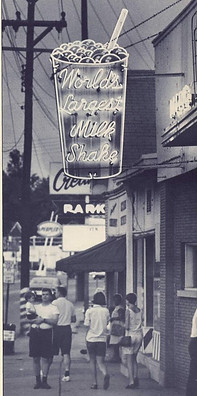
Along the commercial Bardstown Road corridor the facade to the street is pretty much the way it was in earlier days; storefront names have changed, but our memories hold many of the former names of these retail establishments: “Perroni’s Fruits & Vegetables (today part of Doo-Wop Shop), Highland Hardware, Bonnycastle Drugs, and Cream Top,” as examples. Inside the residential microcosms we still refer to homes by their owners of old…the “Field’s house, Miss Agnes’s house or the Brody house on the corner.” We hold on to these intimate ties like familiar and reliable friendships.

As with all growing urban areas, we find ourselves faced with the challenge to preserve the innate and essential qualities of our shared spaces. Commercial investment into residential enclaves, depletion and exploitation of green spaces and natural resources, infrastructure and overlays, ambiguous code variances, increased traffic and parking problems, drugs, crime, vagrancy and vandalism, environmental and social impacts, population density…all are issues which threaten the integrity and well-being of an urban area. A dangerous precedent is set for all neighborhoods in a larger metro area by allowing encroachment of undesirable growth and alteration in any one locality.
Experience shared by residents within the communal surroundings weaves together the fabric of what is a neighborhood. Creating and maintaining a healthy and sustainable urban environment requires us to focus attention on preservation and celebration of natural resources, to embrace ways to maintain the wholeness of the environment, and to encourage mutual appreciation and cohesion of residential spaces.